
Proper balancing of centrifuge samples prevents uneven loads that accelerate rotor and bearing wear, reduces vibration that compromises seals, and maintains consistent g‑forces for reproducible separations. Small mass differences and mispaired adapters often go unnoticed yet cause pellet disruption, cross‑contamination ultracentrifuge, and higher maintenance. Routine mass verification, matched adapter placement, and templates for common configurations stabilize operation and extend rotor life. Continue for practical checks and common mistakes that restore reliability and protect data integrity.
Why Proper Balancing Matters for Rotor Health and Data Integrity
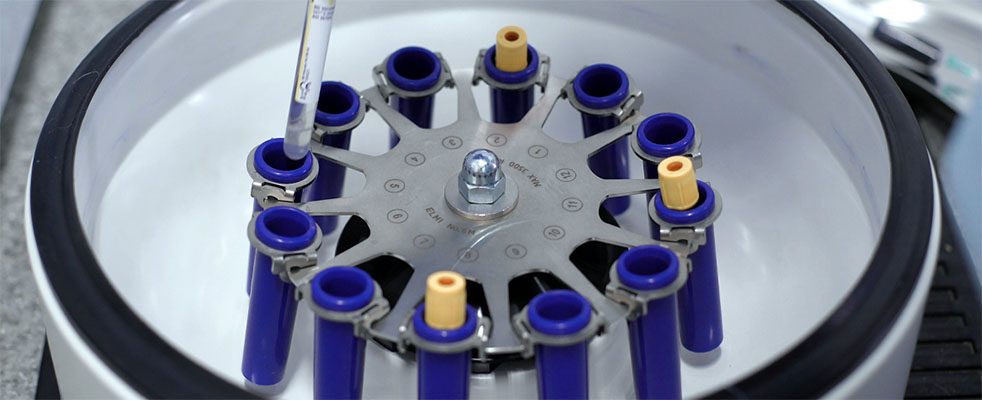
Proper balancing in centrifugation prevents uneven loads that accelerate rotor wear, induce bearing damage, and increase vibration that compromises mechanical integrity; it also maintains consistent g-forces across samples, ensuring reproducible separation and protecting data validity by minimizing sample cross-contamination and pellet disruption. The technician recognizes that routine balancing extends rotor lifespan and reduces downtime, enabling autonomous workflow choices without imposed restrictions https://laballiance.com.my/. Consistent load distribution stabilizes rotational dynamics, preserves seals, and lowers maintenance frequency. Equally weighted samples support uniform sedimentation rates, directly improving measurement accuracy and comparability between runs. Protocols that mandate balance checks empower operators to safeguard equipment and results while retaining flexibility in experimental design. Prioritizing balance is an efficient, principled practice that aligns operational freedom with reliable data outcomes.
Common Balancing Mistakes Labs Keep Making
Even with routine balancing protocols, laboratories repeatedly make predictable errors that undermine rotor health and data integrity. Common balancing mistakes center on complacency: assuming identical tube volumes, neglecting precise mass checks, or misinterpreting rotor symmetry. Operator error frequently arises from shortcutting steps, poor labeling, and inconsistent use of balance instruments. Unequal loads often result when users estimate rather than measure, or when paired samples differ by small but consequential margins. Other issues include mismatched adapters, uneven placement, and failure to account for tube weight variation. These mistakes accelerate wear, increase vibration, and compromise reproducibility. Labs seeking operational freedom must recognize that procedural discipline, objective measurement, and routine verification — not intuition or speed — prevent avoidable damage and unreliable results.

Practical Tips and Quick Checks for Fast, Reliable Balancing
Routinely, technicians should execute a short, consistent checklist before loading the rotor to guarantee fast, reliable balancing: verify each tube’s mass with a calibrated scale, confirm paired positions are filled or counterbalanced, match adapters by type and orientation, and inspect for visible debris or fittings that alter weight. A concise protocol reduces errors: record weight verification, mark tubes for consistent tube orientation, and group similar volumes and vessel types. Use simple templates for common rotor configurations to speed decisions and permit operator discretion. When deviations occur, rebalance by mass rather than volume; small differences compound at high speed. Periodic audits of scales, adapters, and operator technique preserve freedom to run flexible workflows while maintaining safety and reproducibility.